Reports :: ScrumDesk – scrum project management tool

Reports

Reports view allows analyze project status and agile metrics. ScrumDesk provides valuable metrics and reports. These metrics were implemented based on the best practices gathered from our customers.

Metrics for development team

Metrics for Product Owner

Metrics and reports for development team

Velocity by sprints

Velocity by Sprint

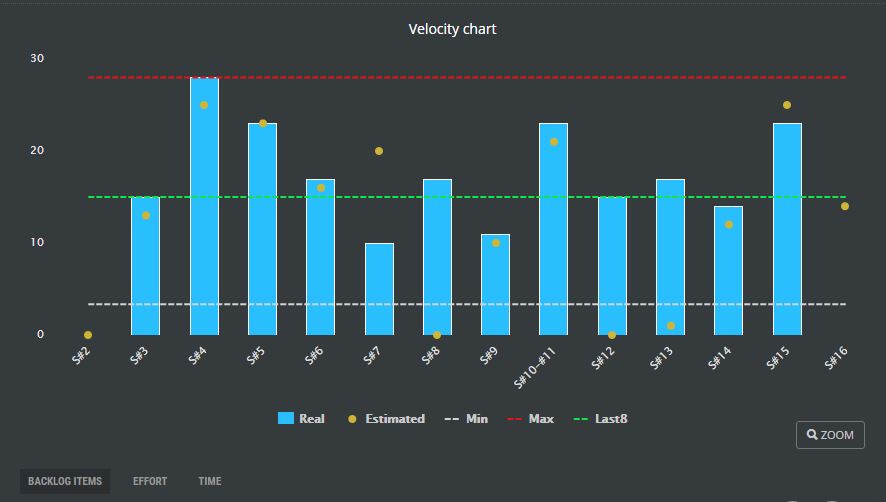
A capacity of the next sprint should be estimated during  sprint planning session.  Teams have to track achieved velocity and estimate the velocity of the next sprint. ScrumDesk supports this decision by calculation of a velocity range.

This chart helps to identify:

  • total amount of the work in sprints
  • state of the sprint stories and thus completeness status
  • estimated maximum sprint velocity
  • velocity of 3 worst sprints
  • velocity of 8 last sprints, the best value to be use as the next velocity
  • maximum sprint velocity

Velocity by weeks and days

This chart is usable for teams doing more Lean techniques or if  a length of the sprints is changing very often.

Velocity by weeks

Velocity by days

Velocity by release

This chart provides releases status overview. Height of the column indicates total amount of  work needed to complete the release. Product owner can easy identify release “price”.

Colored parts of the column indicates status of the release stories. Anyone can recognize if team focuses on one release, if previous sprint was fully done or not.

Velocity by release

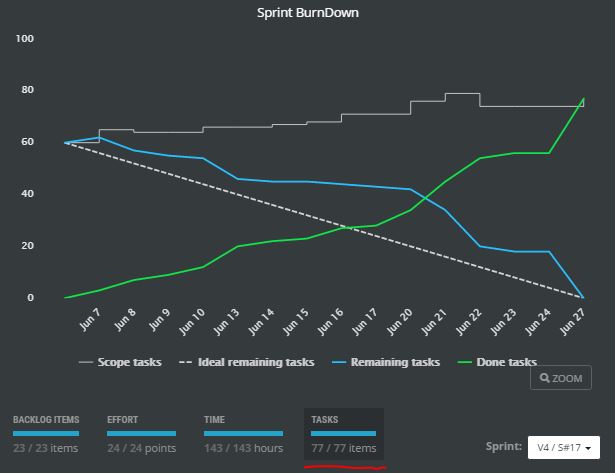
Sprint Burn Down chart

Burn down, burn up, burndown, burnup

Burn down chart is an agile way to know iteration status. This chart displays:

  • Days of the sprint on x-axis
  • Remaining work is displayed on y-axis
  • Dotted line represents Ideal progress of the work
  • Orange line indicates a real work progress. It displays an amount of the work remaining in given sprint day
  • Green line represents a total size of backlog in story points.  This line should be flat as an indication of locked sprint backlog. If it is raising up, then additional work is added into sprint backlog or some stories were re-estimated.  If the line is falling, then some stories were removed from the sprint.
  • Circle makes all impediments visible. A color of the circle represents a status of the impediment (red-new, orange means impediment is solved currently. Green circle indicates solved problem.

Chart data series can be hidden or displayed again by click on the name.

Sprint Burn Up chart

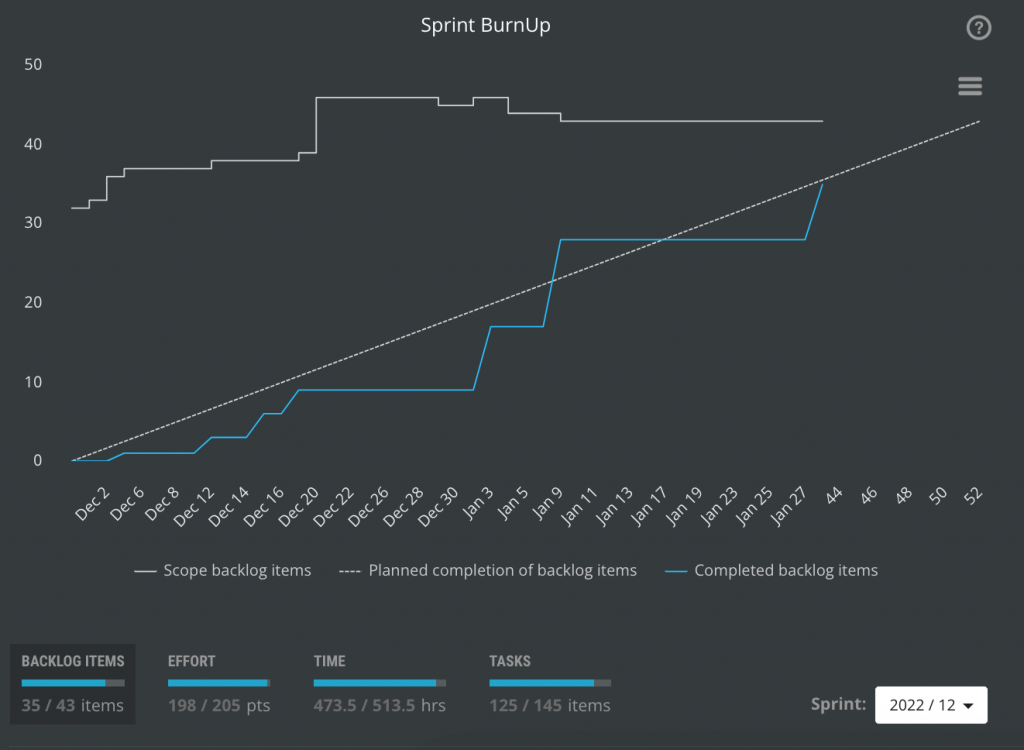
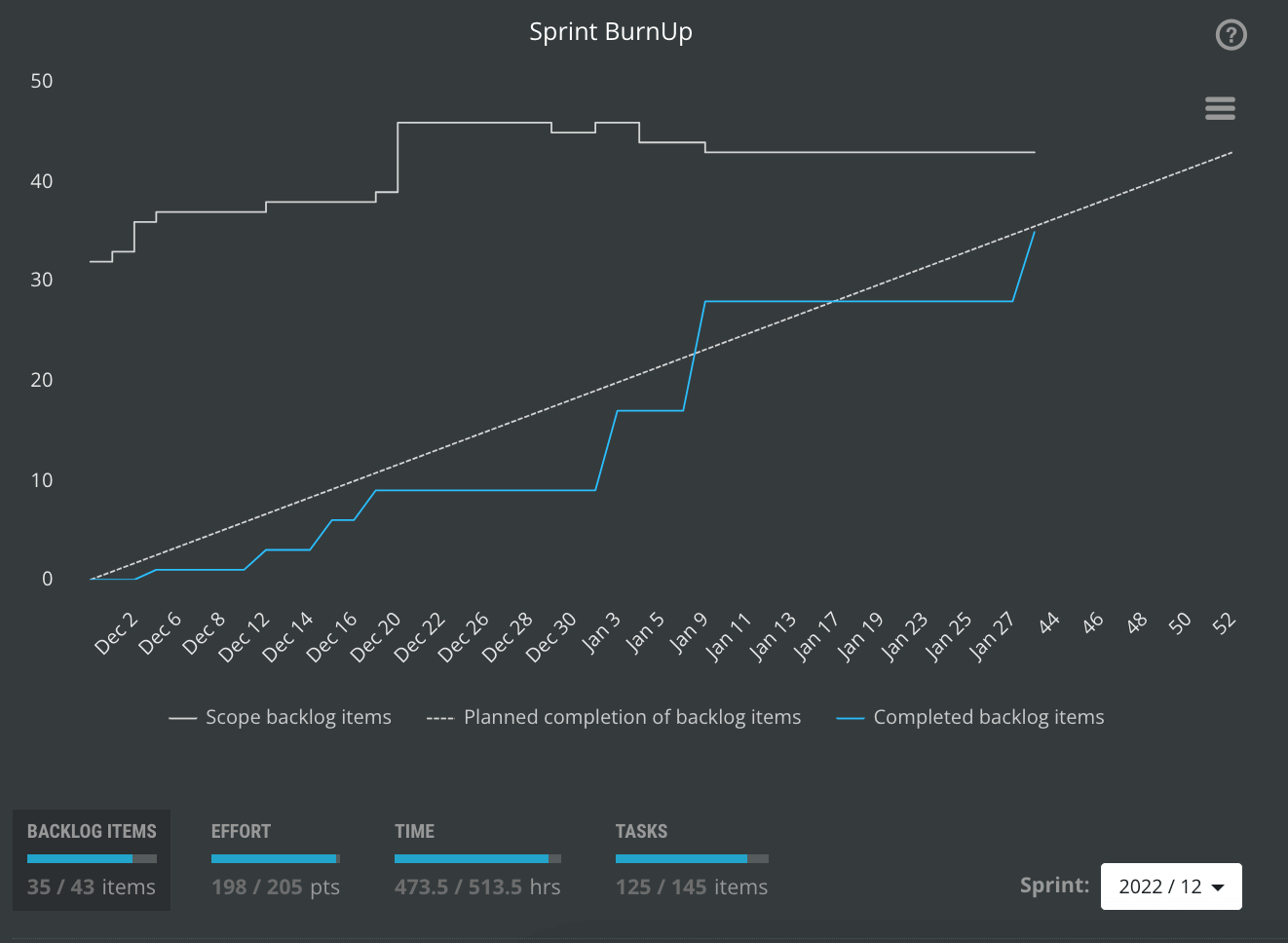
Another useful way of displaying sprint status is to use sprint Burn Up chart. This chart displays how much work has been completed since sprint start and how much work is planned for every sprint’s day.

Solving tasks grey line will raise up to estimated duration line (orange). Orange line should be typically flat. Once additional story is added into sprint, the line will be raising as well.

Burn Up

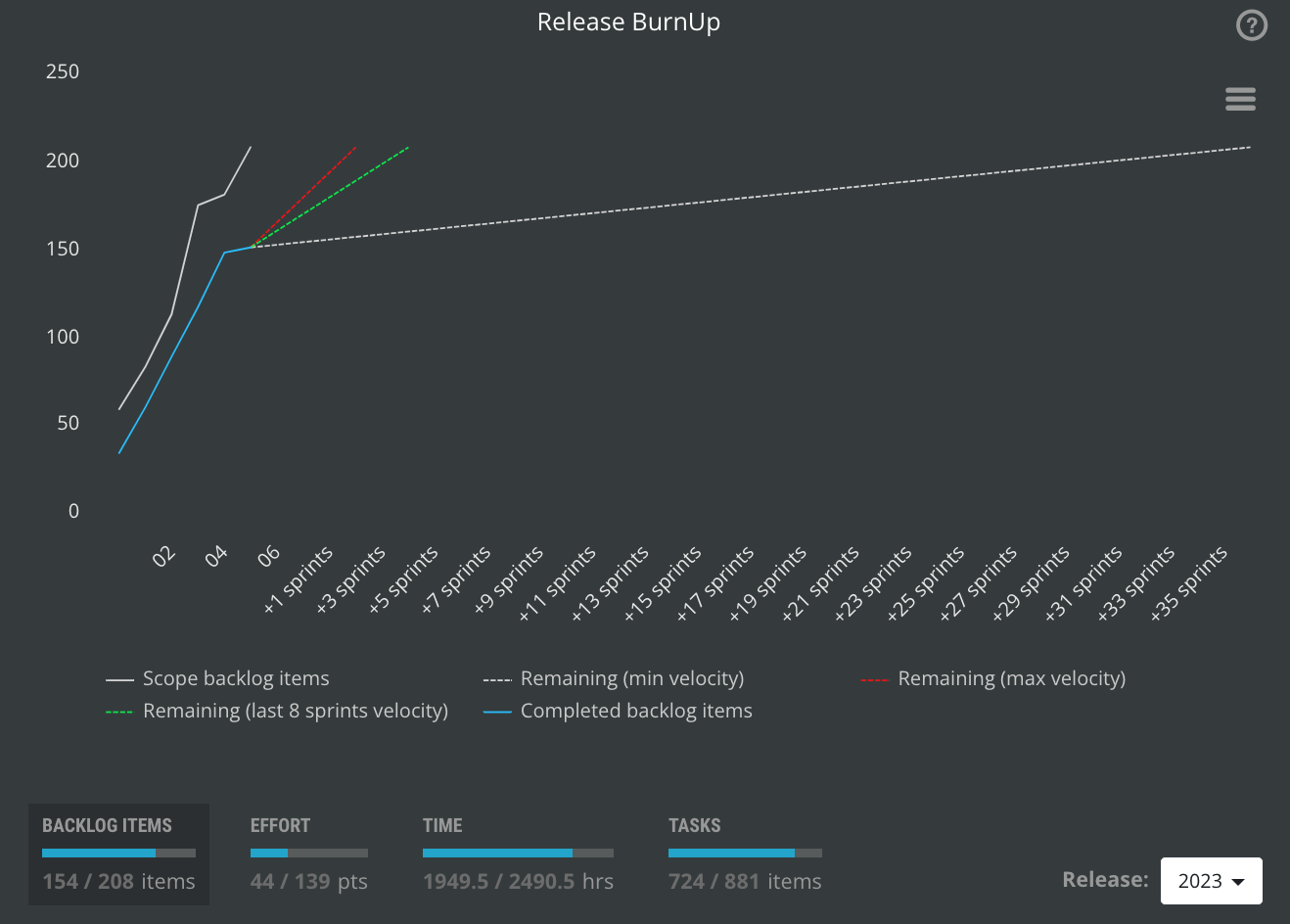
Release BurnDown chart (Iterations burndown chart)

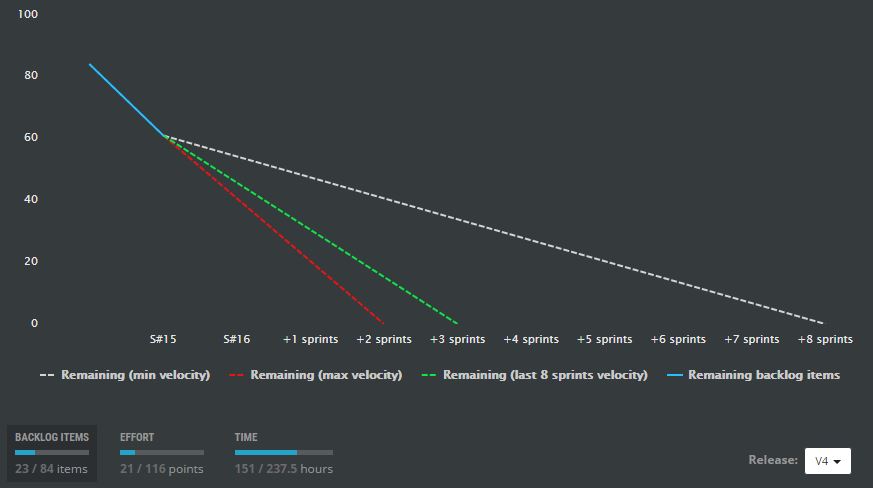
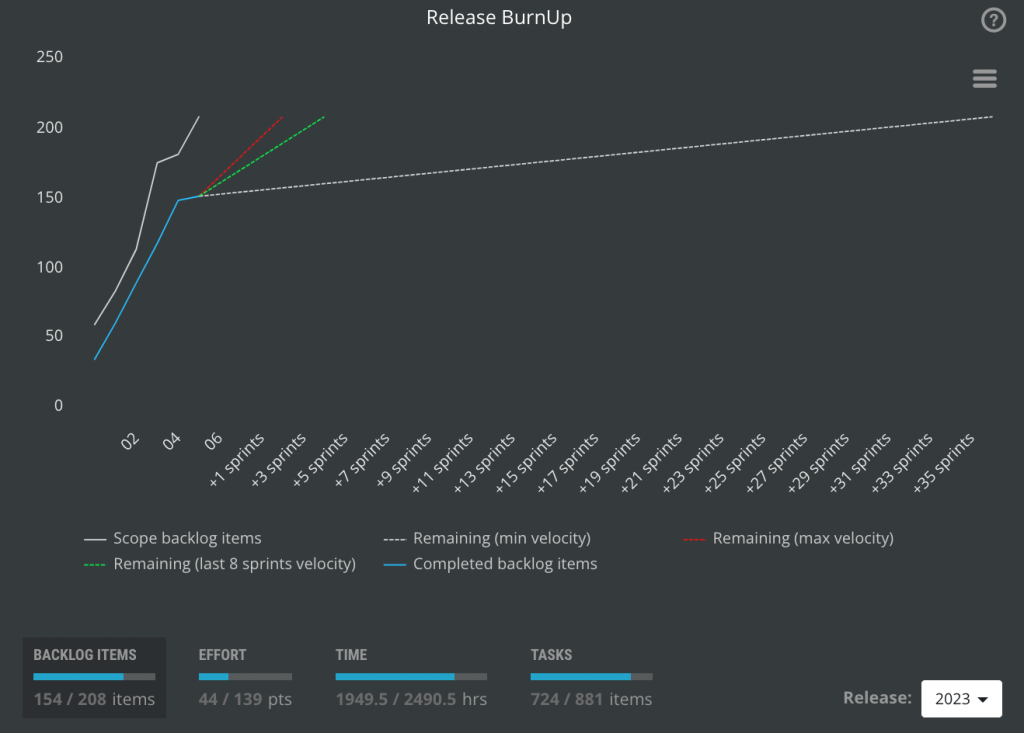
Release BurnDown chart displays progress of the release developed during more sprints. ScrumDesk will help you with estimation when Release backlog will be completed. Estimation is based on statistical velocities of your team.

ScrumDesk supports estiamtion when the release will be done. End release date is calculated according to velocity indicators (worst 3, maximum and last 8 sprints).

Parking lot

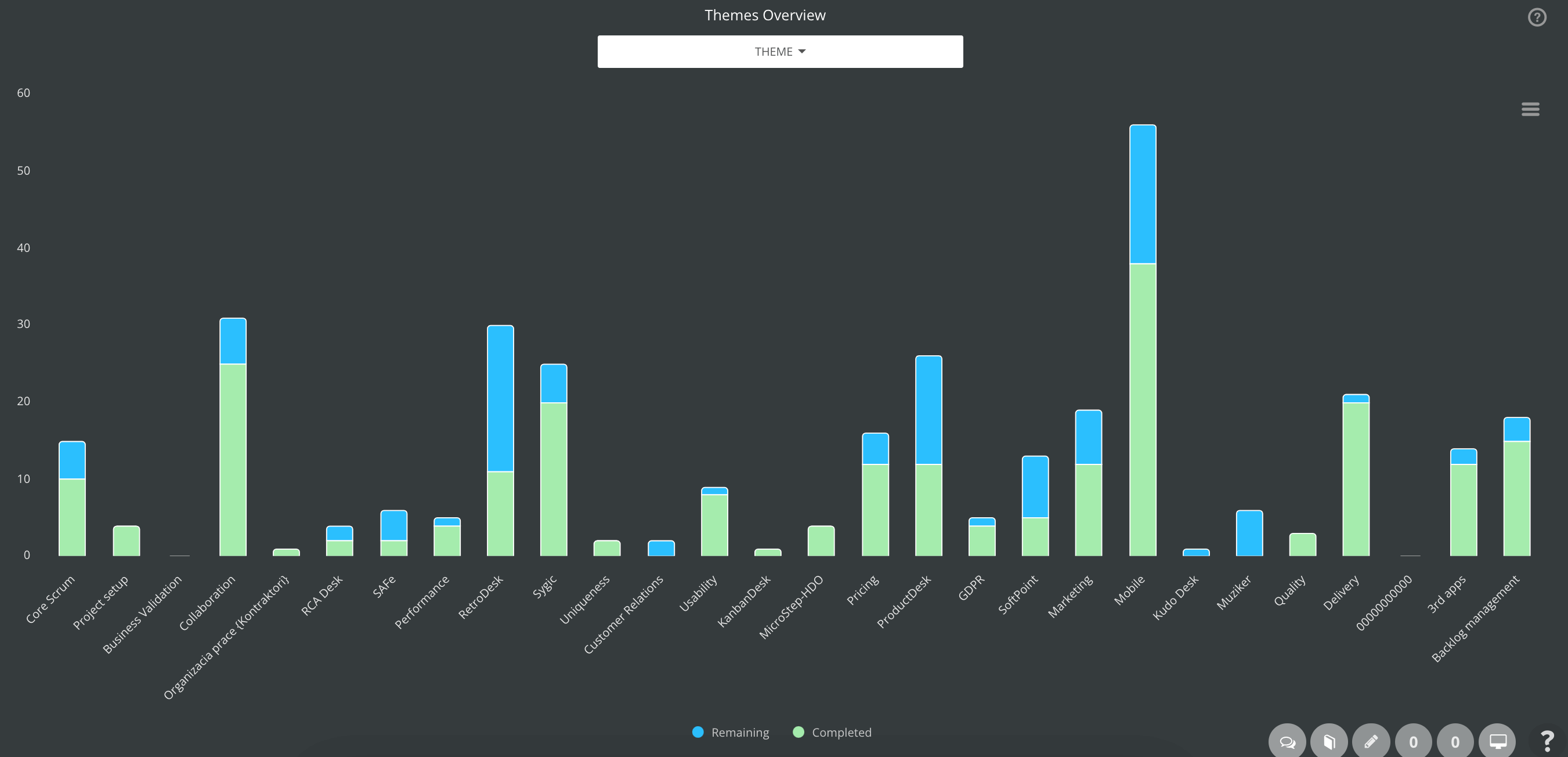
Parking lot report displays themes work status. Card is created for every theme.

Card displays:

  • theme name
  • count of the theme’s stories
  • number of completed story points for theme stories
  • total number of story points for theme stories
  • progress indicator with % of completeness

Parking Lot

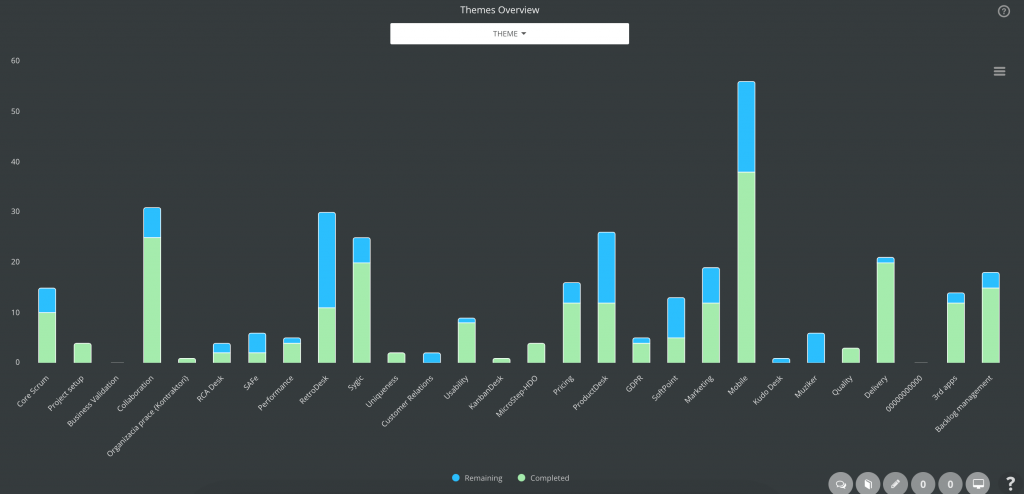
You can see not only the progress of the effort (story points), but also the distribution of work.

Daily Backlog Trends

If you are Product Owner, take a look on this chart to see how project backlog has been implemented. See a progress how fast storypoints were implemented (orange line).

Yellow dots indicate stories developed at given day. Sprints are displayed as small red filled circle.

Changes of the backlog  size are tracked by green line.

Sprint time sheet

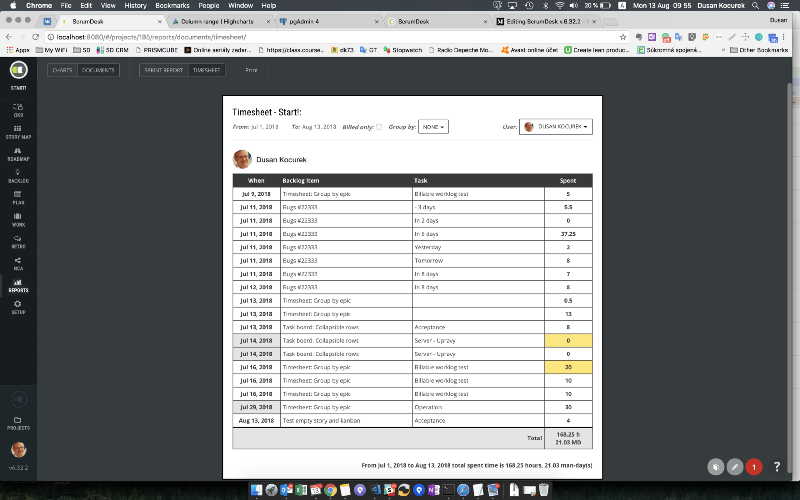
This report displays sprint progress in a form of the time sheet. The time sheet is generated for all team members and selected sprint.

On a row are stories and a tasks displayed. The stories are displayed with yellow background.

Under a story or task name is displayed name of the team member who is working on given tasks. In the second column is displayed a duration estimated before the task starts.

In advance, for some values is small arrow displayed. Color of the arrow indicates exception of the estimated value.

Green arrow  indicates advance in a progress.

Red horizontal arrow  indicates that in given days no progress has been recognized. This can indicate some unexpected problems with implementation or that the user doesn’t update value.

Orange up arrow  indicates that value has not decreased, but increased.

Values displayed with a gray color are values for other team member who participates on the given task.

Stories and tasks can be easy filtered by a click on the team member.  Multiple team members can be selected. Team members can be easy filtered by a filter text box in the right upper corner of the screen.

Sprint can be selected in a combo box from left top corner.

Time Sheet

Detail of the story can be started by a double-click.

Stories by status

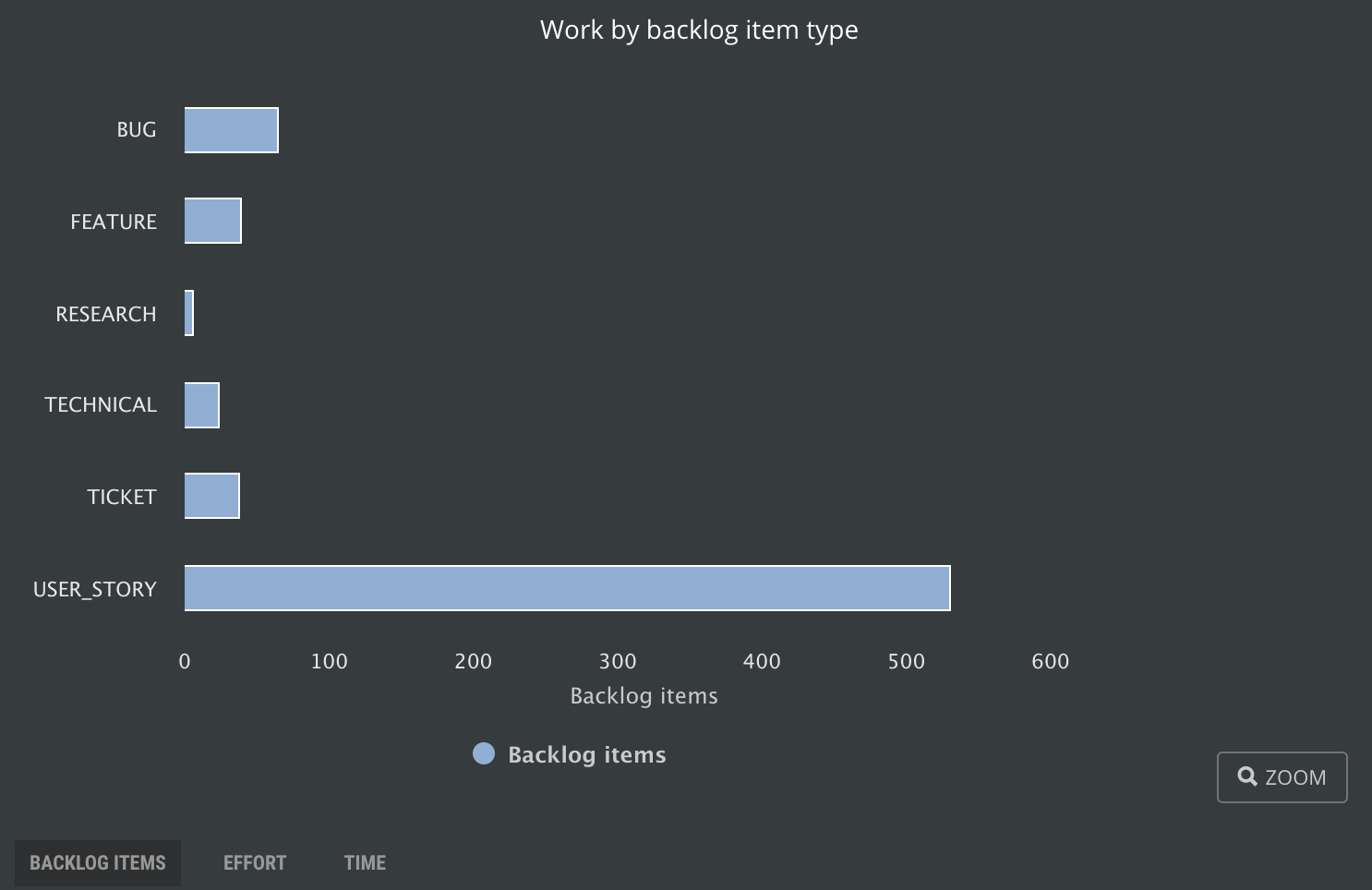
This chart displays distribution of stories by state. User is able to identify current backlog status by an effort (story points) or remaining time.

Metrics and reports for Product Owners

Risk vs. Value

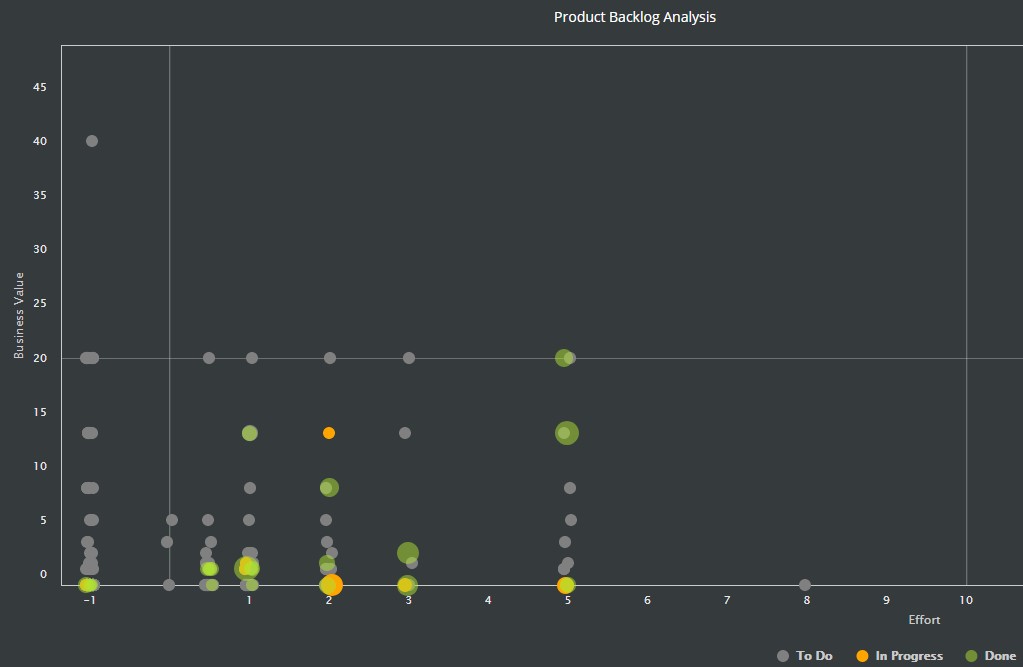
Chart Risk vs. Value displays Risk on X-axis  and Positive Business Value on Y-axis. Stories are distributed into four sectors – Do First, Do Second, Do Last and Avoid.

The color of the circle displays a state of the story. Click on circle to display the story detail window.

It is good project management technique to develop the most riskiest stories as a first. But you should take the business value into account.

If story brings only small value, it is too risky to develop it as the first. Better is to concentrate on stories with higher business value.

Satisfaction and Effort

Kano model describes customer’s satisfaction level. Every story in ScrumDesk can be described by the satisfaction level. Product owner can use this attribute to estimate how the customer will react to stories.

The height of rectangles is sum of all backlog stories with given satisfaction level. Rectangle is divided into areas colored by story’s state.

Levels are:

  • Excitement – if given story is developed, customer will like to have it
  • Indifferent – for customer it doesn’t matter if such story will be developed or no
  • Mandatory – such story is required, it is normal behavior, typical requirement
  • Performance – if you will develop such story, customer will appreciate better performance
  • Questionable – it is a question, if such story will provides any additional value for your customer
  • Reverse – if such story is implemented, your customer will feel uncomfortable

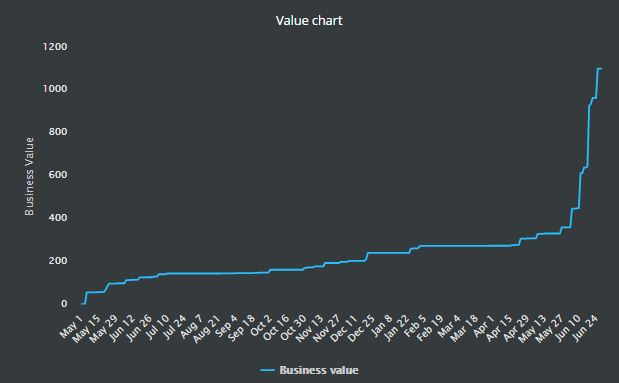
Value in time

Chart displays positive business value completed to given day. Product Owner can easy recognizes the level of value. She can decide if it is enough developed for the product release.