
Scrum Guidelines

Posted on 30, Dec 2011

While being in agile transition, teams look for information how to do agile correctly. Often the question sounds ’How to DO agile?‘ The guideline we prepared might be helpful to shorten your transfromation period and stabilize agile environment earlier. Download full paper as PDF from http://www.scrumdesk.com/Download/Documents/AgileResources/ScrumGuidelines.pdf Scrum Guidelines View more documents from ScrumDesk

Read more

Relations of stories. Are they so necessary?

Posted on 18, Jul 2011

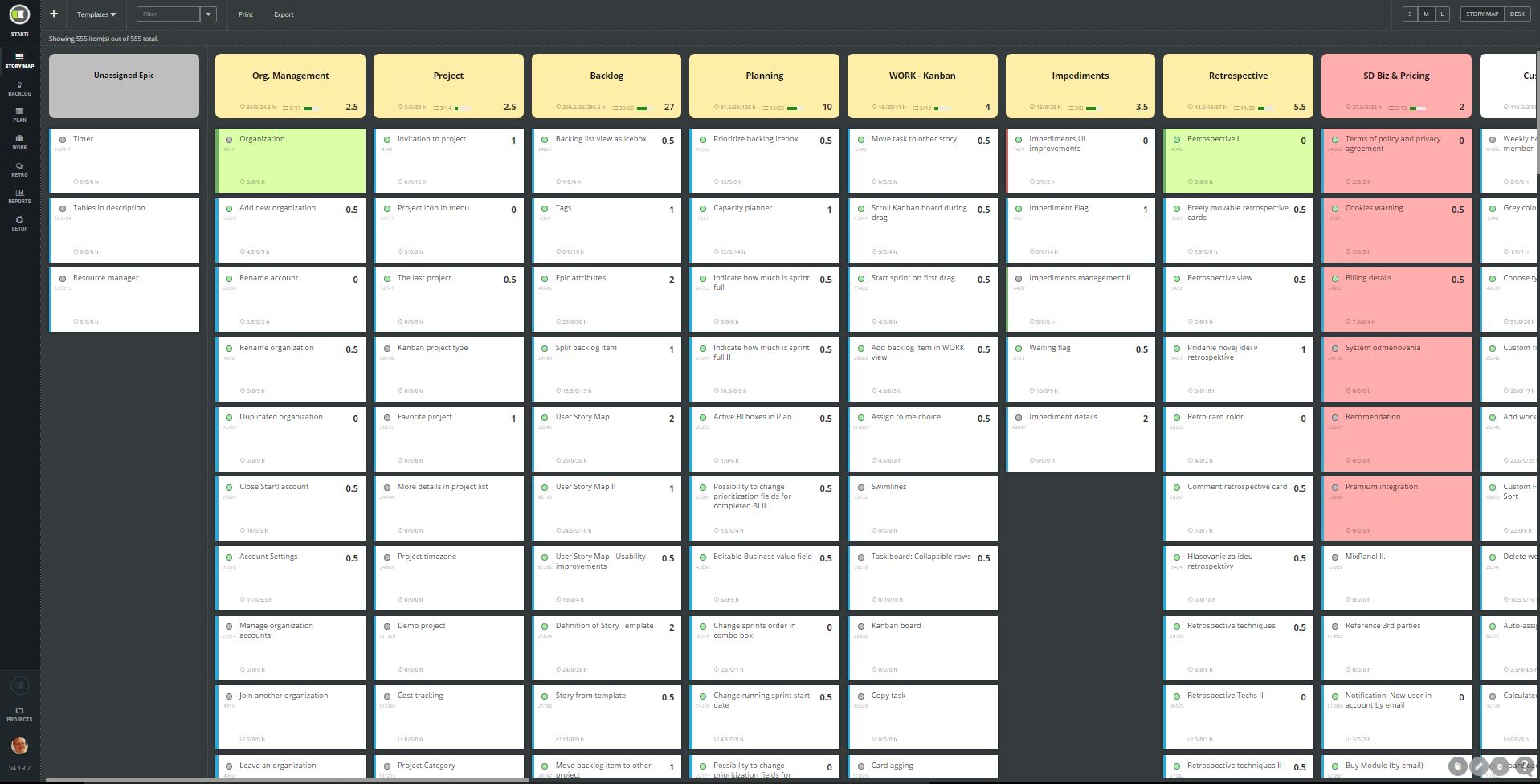
One customer asked us an interesting question regarding relations of stories in ScrumDesk. What ScrumDesk supports now is simple relations tracking solution. Very simple and basic functionality – possibility to track, see and print out it in documents. For the first look some basic functionality in ScrumDesk is missing. Functionality similar to Gannt chart way [...]

Read more

Index Card in ScrumDesk

Posted on 16, May 2011

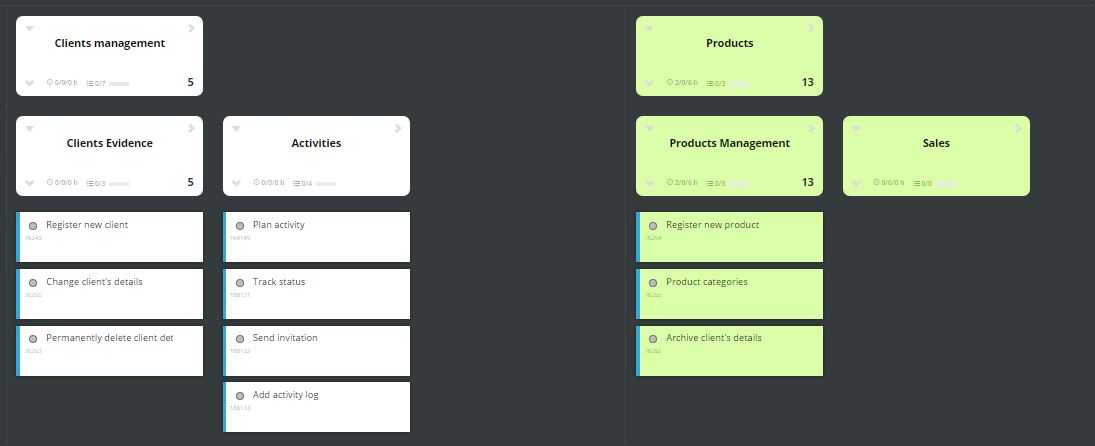
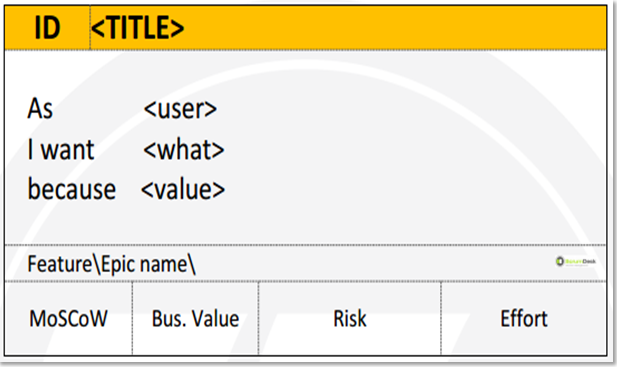
Scrum as project management is using concept of index cards introduced in Extreme Programming (XP). Cards are supposed to establish conversation and clarification of requirements.  Card in ScrumDesk displays more details than paper index card while still provides visibility. ScrumDesk index card’s advantages comparing to other project management tools: resizable many colors only necessary information [...]

Read more

Template your story

Posted on 11, Jan 2011

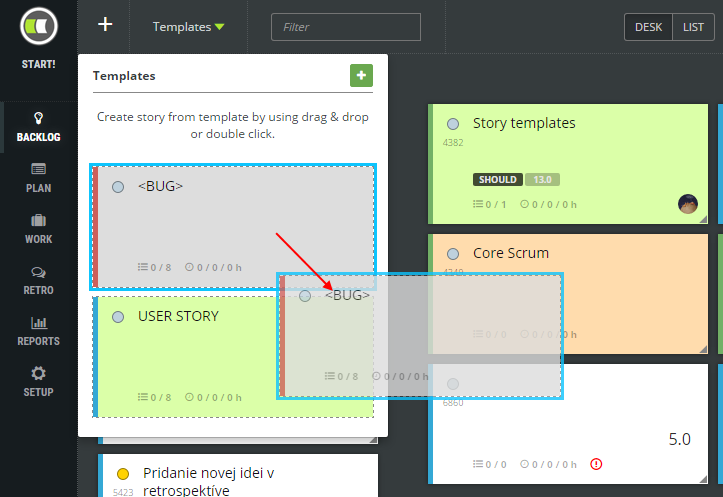
Reaching wider community is for us absolutely welcome not just because of numbers (either count or price). For us the value is a knowledge  how scrum adaptation is done. It is very interesting to see how such simple project management framework is adapted  in so many ways. ScrumDesk development begun as materialized idea based on Scrum and [...]

Read more

How Kano model helps to agile product backlog prioritization

Posted on 28, Dec 2010

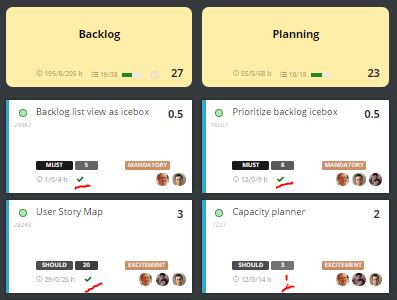
Our previous blog posts were about core product ownership approaches how to prioritize backlog according to business value. Another dimension a product owner should know is expected customer satisfaction. Satisfaction with developed feature or story. Mr. Noriaki Kano developed Kano model as valuable technique helping to recognize that. Applying this method the product owner can identify importance of stories [...]

Read more

What to do as the first? And what to delete from the backlog?

Posted on 20, Dec 2010

Product owner  is often confronted with a large backlog. This post continues  to explain how to consider priority of stories. See principles in previous post. Measuring risk and positive value allows to calculate the order in which stories should be developed. Very nice and simple visualization can be Risk  vs. Value chart. Chart is split into [...]

Read more

Is business value enough for scrum backlog prioritization?

Posted on

Agile coaches teach  teams to develop a  business value that is delivered at the end of the sprint. But should be a value an indicator of the priority? Yes, but not the only one. There are many other attributes we often forget to consider. We suggest to apply different approach. We would like to have a [...]

Read more

Quick tip: How to split or move a story

Posted on 27, Oct 2010

How to split or move story (Screencast)

Read more

Step 3: Define story templates

Posted on 28, Sep 2010

In Step 3 we will define story templates according company process requirements. If your process is not requiring precisely defined steps, go directly to Step 4. Who Scrum Master Story Templates Is story templates required? No. But they are great when you have defined required development process steps. This is typically case for enterprise companies. [...]

Read more

Step 6: Backlog Stories

Posted on

In this step product owner and development team are going to plan project sprints. Who Product Owner Creating stories Target for this step is to create backlog stories. Product Development Product Backlog Stories in scrum are mainly created by product owner. As a first step let’s log in as product owner. Product owner is responsible for requirements specification and prioritization. [...]

Read more